The friction problem nobody talks about
Let's be real: not every body responds to direct rubbing the same way. Some people need sustained pressure and friction to build arousal. Others find that approach exhausting, numbing, or uncomfortable. If you're in the second group, you've probably spent years assuming something was wrong with your body when actually the technique just wasn't matching your wiring.
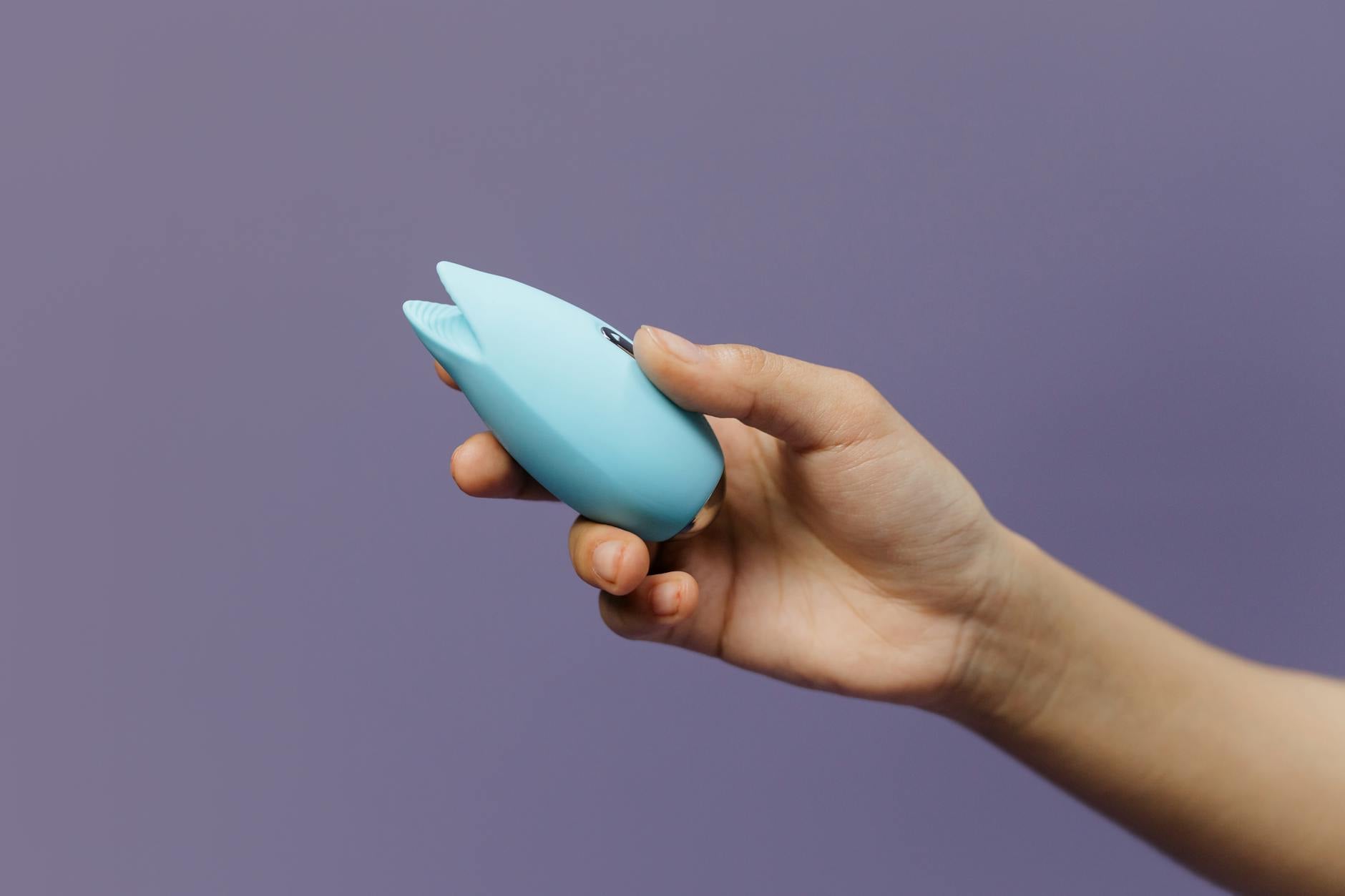
This is where clitoral vibrators like the lemon vibrator shift the game entirely. Instead of relying on friction to generate sensation, they use rapid oscillation to stimulate nerve endings more efficiently. The result? Faster arousal, less physical strain, and often more intense response with less effort.
Why friction doesn't work for everyone
Your clitoris has roughly 8,000 nerve endings packed into a tiny space. Most of those are sensitive to vibration, not pressure. When someone (yourself included) applies direct rubbing friction, you're essentially asking 8,000 nerve endings to fire through repetitive pressure. That works for some bodies. For others, it creates overstimulation, numbness, or that frustrating feeling of "almost there but not quite."
Vibration operates on a different wavelength. Instead of cumulative friction building sensation, vibration creates a constant, rapid neural signal that's often more efficient at triggering arousal. A good lemon clitoral vibrator delivers this at 2,000 to 7,000 oscillations per minute depending on the pattern. Your nervous system registers this as a continuous, escalating signal rather than a repetitive friction that can plateau.
That's why many people experience faster arousal using a vibrator than using hand stimulation alone. Your body isn't working harder. It's working smarter.
How to start: find your entry pattern
The biggest mistake people make with lemon vibrators is jumping straight to the strongest pattern. Your clitoris doesn't need intensity to wake up. It needs the right frequency.
Start on pattern 1 or 2, even if it feels subtle at first. Spend 2-3 minutes here. You're not trying to orgasm yet. You're mapping how your nervous system responds to vibration specifically. Pay attention to where you notice first sensation. Most people feel it as a subtle awakening rather than a jolt.
Keep the vibrator in light contact. You're not pressing it hard against your body. Think of it as hovering, making contact, letting vibration do the work instead of your hand. This is the opposite of friction-based technique.
The positioning that speeds things up
If you're used to manual stimulation, your body probably expects touch on one specific spot. Vibration rewards exploration. Try these placements:
Direct contact on the clitoral glans. This is the most straightforward approach and works for people who want maximum sensation quickly. Hold the vibrator lightly, let vibration make the contact, and notice when sensation starts building.
Just above the clitoral glans, where the hood sits. Stimulating through tissue can feel gentler while still delivering arousal. This often produces faster response in people who find direct contact overwhelming initially.
Circling the clitoral area instead of holding still. Slow, gentle circles with the vibrator on pattern 1 or 2 create waves of sensation that can feel less intense than static contact. Many people find arousal builds faster this way because it doesn't allow overstimulation of one nerve cluster.
The inner labia on either side. This sensitive tissue surrounds your clitoris and responds well to vibration. Stimulating here first can build arousal before moving to direct contact, creating a layered experience that often feels faster and more satisfying overall.
Building arousal faster by layering sensation
Here's a technique that consistently accelerates arousal for people seeking quicker response: start with surrounding tissue, then move inward.
Spend 2-3 minutes on pattern 1 or 2 against your inner labia. Your clitoris is waking up through proximity, but nothing feels intense yet. Then move to the clitoral area on the same pattern. Because your nervous system is already partially activated, arousal now builds faster. By the time you increase to pattern 3 or 4, you're already on an upward trajectory instead of starting from neutral.
This approach works particularly well for people who've found that jumping to high intensity never quite lands right. Your clitoris needs a runway, not a cliff edge.
Why rhythm matters more than intensity
One of the discoveries people make with lemon vibrators is that pattern matters far more than strength. A lower intensity on the right pattern often produces faster, more reliable arousal than maximum intensity on a random pattern.
Experiment across 3-4 sessions with the patterns your vibrator offers. Notice which one creates the steadiest buildup. For some people it's the consistent pulse. For others it's the pulsing wave or the escalating rhythm. Your clitoris has a preference, and finding it can cut your arousal time in half.
The pattern that works fastest usually feels almost boring initially because it's not overwhelming. That's exactly the point. Boring is efficient.
The role of breath and mental focus
Friction-based stimulation often requires active mental participation. You're working physically, so arousal feels like something you're doing. Vibration creates a window where arousal can feel like something happening to you.
This shift matters for speed. When you're focused on friction technique, your nervous system is partially occupied managing the physical work. With vibration, you can actually relax and let sensation build. That relaxation is what allows faster arousal. Your nervous system isn't fighting itself.
Try this: once you've found a pattern and position that feels right, focus on your breath instead of your body. Breathe normally, maybe slightly deeper than usual, and notice how much faster arousal builds when your brain isn't narrating the experience.
Many people who've struggled with slow arousal or difficulty reaching climax find that this mental shift, combined with the right vibrator, changes everything.
When to add lubricant
Vibrators don't require the same lubrication as manual stimulation or penetration, but adding it can actually speed up arousal for some people. A small amount of water-based lubricant reduces any micro-friction and allows the vibration to transmit through tissue more smoothly. This can create more sensation with less pressure.
If you've never used lube with a vibrator, try it on pattern 1 or 2 once. Notice whether sensation feels more efficient or more muted. Some people find it accelerates arousal. Others find it disperses sensation. There's no wrong answer. Your preference is the only metric that matters.
Building a faster arousal practice
Once you've found your pattern and positioning, consistency creates speed. Your nervous system learns. The first time you use a lemon clitoral vibrator, arousal might take 8-10 minutes. By your fifth session, you might be building arousal in 3-4 minutes because your body recognizes the signal.
This is particularly useful for people who want to integrate pleasure into a busy life. You're not looking for a 45-minute experience every time. You want reliable, efficient arousal on demand. Vibration delivered correctly can provide exactly that.
The key is returning to the same pattern and position for at least 5-7 sessions before experimenting with variations. Your clitoris needs to learn this signal first.
Troubleshooting if arousal still feels slow
Sometimes faster arousal isn't about the tool. Sometimes it's about what's happening in your head or body.
If you're using a lemon vibrator on the right pattern and positioning still feels sluggish, consider whether stress, distraction, or relationship tension is dampening your nervous system. A brilliant tool can't override true disconnection. Sometimes the better move is addressing what's slowing your head down before focusing on what's speeding your body up.
If arousal is slow but you're mentally present and relaxed, try spending more time on lower patterns before escalating. Slow burn often produces faster arousal once it actually ignites.
And if nothing feels right, give yourself permission to stop and try again another time. Pushing through frustration is the opposite of the approach that makes vibration work.
How this changes everything
Faster arousal isn't just about saving time. It's about discovering that your body isn't broken. It never was. It just needed a different approach. Many people who've struggled with slow arousal or difficulty reaching orgasm find that introducing a clitoral vibrator like the Lem fundamentally rewires their relationship with pleasure.
You become someone who can reliably access arousal instead of someone who's perpetually chasing it. That shift is powerful, both physically and psychologically. Your pleasure becomes something you trust instead of something you doubt.
Start with pattern 1, light contact, and patience. Let your nervous system recognize this new signal. Within a few sessions, you'll probably notice arousal building faster and more reliably than ever before.
People also ask
Why does my lemon clitoral vibrator feel less intense than manual stimulation?
Vibration and friction send different signals to your nervous system. Manual friction applies sustained pressure that some nerve endings find numbing over time. Vibration creates rapid, repeating signals that often feel gentler initially but can be more effective at triggering arousal. Intensity and effectiveness aren't the same thing. A vibrator might feel less intense while producing faster, more reliable arousal.
How long does it usually take to feel arousal with a vibrator?
On the right pattern and positioning, most people notice initial arousal building within 2-5 minutes. Full arousal often takes 5-10 minutes on first use, then gets faster as your nervous system learns the signal. By your fifth or sixth session, many people report arousal building in 3-4 minutes. This is much faster than manual stimulation for people whose bodies respond to vibration.
Can I use a lemon vibrator with a partner if I want faster arousal?
Absolutely. Having a partner hold the vibrator while you focus on breath and sensation often speeds arousal because you're not managing the tool physically. You can also show your partner the pattern and positioning that works best for you, turning it into a collaborative discovery. How to Use a Lemon Vibrator With a Partner When You Have Different Pleasure Speeds offers more guidance on this.
What pattern is best for fastest arousal?
There's no universal answer. Most people find that a consistent pulse or pulsing wave produces faster arousal than a chaotic rhythm, but your specific preference matters most. Spend 3-4 sessions exploring different patterns on low intensity to find which one creates the steadiest sensation buildup. Once you find it, stick with it for at least five uses before switching.
Is less friction always better for arousal speed?
For most people, yes. But not everyone. Some bodies genuinely prefer sustained friction and find vibration dissipating or overwhelming. The only way to know is to try both approaches across several sessions. If vibration paired with light contact works better than friction, you've found your answer. If friction still feels faster and more reliable, trust that.
How do I know if a lemon vibrator is right for my body?
If you've struggled with slow arousal, difficulty reaching orgasm, or felt numb with manual stimulation, a clitoral vibrator is worth exploring. If you naturally prefer sustained pressure and friction, you might find vibration less satisfying. The best way to learn is through experimentation. Many people find that How to Use a Lemon Vibrator When You Want Stronger Clitoral Stimulation Over Fifty speaks to their experience, even outside that age range.
The takeaway
Your body's arousal speed isn't fixed. It's responsive to the right technique and the right tool. If you've been struggling with slow buildup, friction fatigue, or feeling numb with manual touch, a lemon clitoral vibrator often changes the game entirely. Faster arousal isn't about pushing harder. It's about signaling your nervous system in a way it actually recognizes.
Start with pattern 1, light contact, and genuine curiosity about how your specific body responds to vibration. Most people discover within a few sessions that arousal can be faster, easier, and more reliable than they ever thought possible.
Ready to explore? Get in touch if you have questions about which lemon vibrator might work best for you.