Here's what changes, and what absolutely doesn't
Your clitoris after fifty is not a dimmer switch turned down low. It's a different piece of equipment altogether. The nerve endings are still there. The capacity for sensation is intact. But the tissue gets thinner, blood flow patterns shift, and what felt perfect at thirty might feel either too gentle or too sharp now.
This is where most people get it wrong. They assume they've lost sensitivity entirely, so they turn up the vibration until something works. Or they think intensity isn't possible anymore, so they settle for gentle buzz that barely registers. Both paths lead to frustration.
The truth: you probably want different intensity, not less of it.
Why air-suction works better for this stage of life
Let's talk mechanics. A standard vibrator creates stimulation through rapid back-and-forth movement. It's direct friction. For younger tissue with more natural lubrication and thicker outer layers, that works fine. Over fifty, that same friction can feel sharp or even painful on thinner tissue. It's not weakness. It's physics.
Air-suction technology—the kind used in a lemon vibrator—works differently. Instead of friction, it creates a gentle seal and rhythmic suction pattern over the clitoris. This stimulates the nerve network without the mechanical harshness of traditional vibration.
The result? Stronger sensations at lower intensities. You get the powerful orgasms you want, but without rawness afterward or that feeling of being overstimulated.
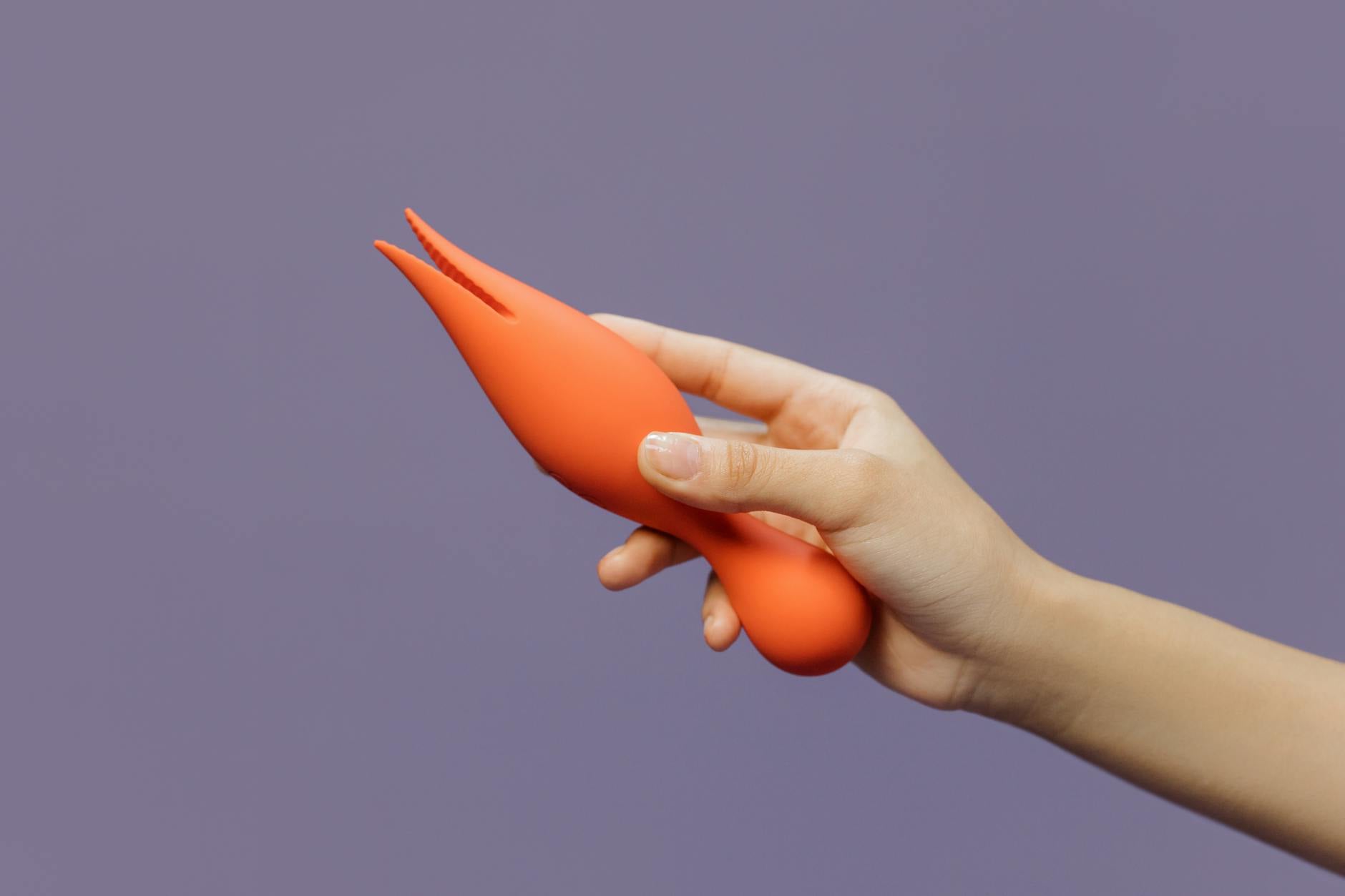
Photo by cottonbro studio on Pexels
The warm-up is non-negotiable now
This isn't a return to a younger pleasure pattern. It's a completely different requirement. Arousal takes longer to build after fifty because blood flow to genital tissue moves more slowly. You might need twenty to thirty minutes before your clitoris is truly ready for intensity.
Skipping this kills the whole experience. You'll jump straight to the vibrator, nothing will feel good, and you'll think the device isn't right for you. But it's not the device. It's the preparation.
Start with touch—yours or a partner's. Read something that makes your body respond. Take a bath. Think about what you actually want, not what you think you should want. Let your clitoris swell and unfold naturally. Only then introduce the lemon vibrator.
Starting pattern (and why you might go higher than you expect)
Most people assume they should start on the gentlest setting. With air-suction lemon vibrators, that's often the wrong move. The lowest settings can feel like nothing at all. You'll spend ten minutes chasing sensation instead of having it.
Start on pattern 3 or 4 instead. Yes, higher than conventional wisdom says. This gives you immediate feedback that the device is actually working. If it's too intense, you can pulse it or adjust. If it's perfect, you've found your baseline.
Many of my clients over fifty discover they prefer patterns in the middle-to-upper range. This isn't lack of sensitivity. It's appropriate calibration for what your body needs now.
Positioning for intensity and comfort
Direct application works, but angling matters more as tissue becomes more sensitive. Rather than holding the lemon vibrator straight against your clitoris, try positioning it at a slight angle—maybe forty-five degrees. This distributes the sensation and often feels more intense and more comfortable simultaneously.
If direct stimulation feels overwhelming even after proper warm-up, try stimulating the hood or the area around the clitoris rather than the glans itself. You'll still get strong sensations because the nerves spread across that whole region.
Don't be rigid about this. Your body's preferences will shift week to week depending on where you are in your cycle, stress levels, and just random variation. What felt perfect last week might need tweaking this week. That's normal.
Adding lube even though you might not think you need it
Here's a counterintuitive piece: even if your natural lubrication is fine, adding a water-based lubricant to the area before using a lemon vibrator can actually increase sensation. It helps the seal form more effectively and creates a smoother glide.
Use a small amount. You don't need much. This isn't about compensation. It's about optimization. Think of it like moisturizer for your face. You're not fixing a problem. You're creating ideal conditions.
What happens when you build up tolerance
If you use the lemon vibrator frequently—multiple times a week—you might notice that the same pattern starts feeling less intense after a few weeks. This isn't desensitization in the way people usually mean it. It's adaptation. Your nervous system gets better at processing the signal.
The fix isn't to jump to the strongest setting and stay there. Instead, take a break. A week or two without the device resets your baseline. When you come back, pattern 4 feels like pattern 6 again.
Alternatively, vary your approach. One session use direct suction. The next session use the device over your underwear for a muffled sensation. Another session pair it with a partner's touch elsewhere. Variety keeps your nervous system engaged without numbing.
Temperature, breathing, and mental focus
You might find that warming the lemon vibrator slightly before use—holding it in warm water for thirty seconds—makes it feel better. Your clitoris has temperature receptors that enhance sensation when things are warm. This isn't essential, but it's a small variable worth experimenting with.
Breathing matters more now than it did when you were younger. Deep, slow breathing before and during use keeps your pelvic floor relaxed and blood flowing to your genitals. If you hold your breath, you tighten everything and reduce sensation. Focus on exhaling—literally breathe into the pleasure.
Mental focus is non-negotiable. At this stage of life, distraction kills intensity faster than anything physical could. Your brain is the biggest sex organ. If you're thinking about tomorrow's meeting or your kid's college applications, a lemon vibrator won't save you. Clear the space. Phone on silent. Brain engaged in what's happening right now.
Stronger doesn't always mean alone
If you have a partner, this is actually an ideal time to bring lemon vibrators into shared pleasure. A partner can hold the device while you focus on sensation. They can watch your responses and adjust. They can touch you elsewhere simultaneously. The dynamics change—and often improve—after fifty.
There's also something psychologically powerful about a partner understanding that stronger stimulation is what you need now. It reframes pleasure from something declining to something evolving. How to use a lemon vibrator with a partner when you have different pleasure speeds can help navigate those conversations if you're moving at different paces.
When intensity plateaus
If you reach a point where even the strongest setting of a lemon vibrator feels adequate but not transcendent, don't assume you've hit your limit. Sometimes combining methods works better than intensity alone.
Pair your lemon vibrator with a partner's touch. Use it while reading erotica. Try it in a different setting entirely—not in bed, maybe somewhere unexpected and slightly risky. Novelty itself is a neurological stimulus.
You might also explore whether other variables have shifted. Stress, sleep, medications, or hormonal changes can all dampen intensity from the inside out. A conversation with your doctor might be more helpful than a stronger vibrator.
Frequently Asked Questions
How often can I use a lemon vibrator after fifty without desensitizing?
There's no magic number. Some people use a lemon vibrator daily with zero problems. Others use it twice a week and find they appreciate it more. Listen to your body. If something feels less good, take a break. If you're having great experiences, keep going. Frequency matters less than variety and how you feel.
Will a lemon vibrator feel different if I'm on hormone therapy or managing menopause?
Yes, potentially. Hormone therapy can actually restore some tissue thickness and lubrication, which changes how sensations register. If you've been using a lemon vibrator for months and then start HT, you might need to recalibrate your preferred pattern. It's not a bad change—it's just different. Give yourself permission to rediscover what works.
Can I use a lemon vibrator if I have arthritis or limited hand strength?
Absolutely. The lightweight design of lemon vibrators makes them accessible if grip strength is limited. You can also rest it against your body rather than holding it, or ask a partner to handle positioning. This is one of many reasons why air-suction devices are particularly useful later in life.
Is it normal for sensations to feel numb or muted sometimes?
Completely normal. This happens for a thousand reasons: stress, medication side effects, not enough warm-up time, hormonal fluctuations, even just being tired. Don't force it. If numbness persists for weeks, check in with a doctor. But occasional off sessions are part of any pleasure practice.
Do I need to use the highest setting to have a strong orgasm?
Not at all. Some of the most intense orgasms come from mid-range settings combined with good warm-up, mental focus, and breathing. Many people conflate loudness or speed with strength. A lemon vibrator on pattern 5 with your full attention often beats pattern 10 with distraction.
What if stronger stimulation triggers discomfort or pain?
Stop and reassess. Pain is information. It might mean you need more warm-up. It might mean the positioning is off. It might signal an underlying issue like a skin irritation or infection that needs attention. If pain persists even with adjustments, a gynecologist can help determine what's happening. Don't push through it.
The pleasure you want is still within reach
Strong, satisfying orgasms after fifty aren't nostalgia. They're not a consolation prize. They're often deeper and more nuanced than they were at thirty because you know yourself better, you're less worried about performance, and you have decades of wisdom about what actually feels good.
A lemon vibrator—with its air-suction design and thoughtful intensity—is built for exactly this stage of life. Not because your pleasure is declining, but because it's evolving. The intensity you want is achievable. It just requires a slightly different approach.
If you want to talk through what might work best for your body, reach out to us. We're here to help you find exactly what serves your pleasure.