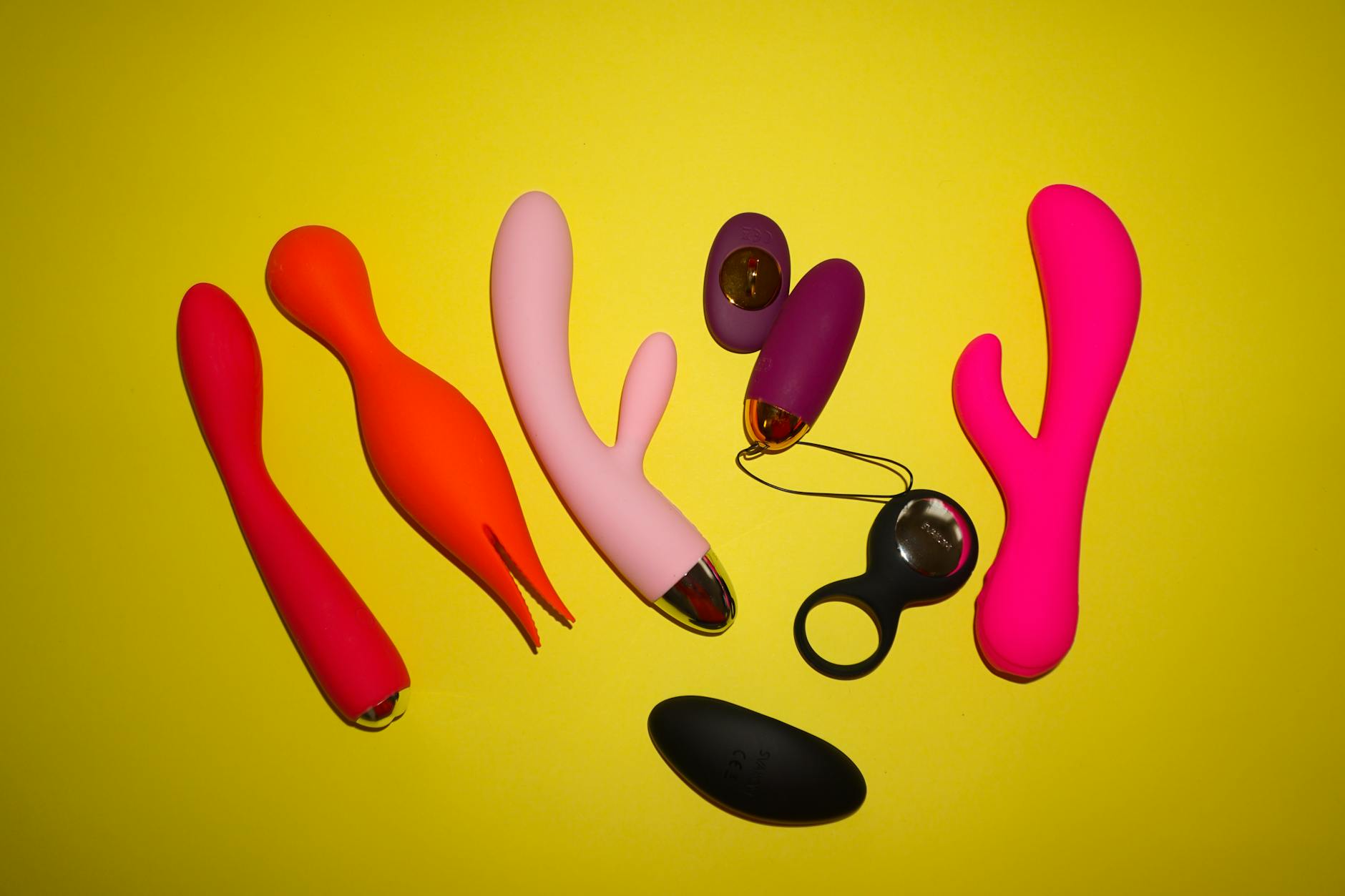
Let's start with the honest part
Your hands are not the gold standard of clitoral stimulation. This isn't a dig at manual skill. It's just anatomy and physics. A lemon vibrator or any quality clitoral vibrator does three things your fingers genuinely cannot do at all, and that's before we even talk about the pleasure part.
What your fingers can't sustain
Consistency is the first thing. Your hand gets tired. Your rhythm drifts. The pressure changes slightly with every breath. Your mind wanders for half a second and the angle shifts. None of this is a failure on your part. It's human.
A lemon clitoral vibrator maintains exactly the same frequency, pressure, and pattern for as long as the battery lasts. The Lem, for instance, holds a steady rhythm across all ten settings without fatigue, without distraction, without your forearm starting to ache.
That consistency matters neurologically. Your nervous system doesn't have to compensate for variation. It can build arousal in a more linear way. Studies on vibration frequency show that predictable stimulation actually allows the nervous system to reach climax more reliably than variable touch does.
The frequency you can't replicate by hand
A quality lemon vibrator typically operates between 3,000 and 10,000 vibrations per minute depending on the setting. That's 50 to 166 vibrations per second.
Try to tap your clitoris that fast with your finger. You can't. Your hand neuromuscularly maxes out around 5 to 10 taps per second. The motor in a vibrator doesn't tire. It doesn't lose precision. It doesn't depend on your muscular endurance.
That frequency stimulates nerve endings in a way that slower, manual touch simply cannot. Your clitoris has roughly 8,000 nerve endings concentrated in a space smaller than a pea. High-frequency vibration activates more of those at once, which translates to more intense sensation.
This is why people who've only experienced manual stimulation often describe their first time with a quality lemon vibrator as a revelation. It's not that hands are bad. It's that vibration accesses a different category of sensation entirely.
The pressure distribution problem
Your finger is a point. A vibrator distributes pressure across a larger surface area, and the motion is perpendicular to the skin rather than sliding along it.
When you use your hand, you're applying pressure in one direction, usually with varying intensity depending on your grip. A lemon clitoral vibrator like the Lem applies consistent, even pressure across the contact surface while vibrating. For many people, this feels less intense initially but becomes more satisfying over longer sessions because there's no pressure buildup in one spot.
It's also gentler on sensitive tissue. If you've ever noticed that manual stimulation gets uncomfortable after a while, or that you need to keep adjusting your grip, this is often why. The vibrator's consistent, distributed pressure doesn't create that localized fatigue.
Why consistency changes what's possible
Here's where it gets interesting from a pleasure perspective. When stimulation is consistent and predictable, your body can actually relax into it more fully.
This sounds counterintuitive. You'd think more mental control would help. But arousal actually requires a certain amount of letting go. When you're manually stimulating yourself, part of your attention is on maintaining the motion, the pressure, the speed. Even if you're not aware of it, you're micromanaging.
With a vibrator, that management is automated. Your brain can focus entirely on sensation and arousal rather than execution. Many people report that this mental shift alone changes the experience. Some find they can reach climax faster. Others find that climaxes feel more intense or multi-layered.
This is also why a lemon vibrator works particularly well with a partner. One person can focus entirely on the rhythm and connection rather than physical effort. Partners often describe it as freeing because the pressure (literal and otherwise) comes off the person doing the stimulating.
The science of vibration and nerve response
Your nervous system has specialized receptors that respond specifically to vibration. These are called Pacinian corpuscles, and they're scattered throughout your body but highly concentrated in erotic tissue.
Pacinian corpuscles are tuned to respond to vibration frequencies between about 200 and 300 hertz. A quality lemon vibrator operates in exactly that range. This is not coincidence. The most popular vibrator frequencies on the market are the ones that match human neurology most precisely.
Manual touch at variable speeds doesn't maintain that frequency. A vibrator does. This is why you can get results with your hands, but a vibrator feels qualitatively different. You're accessing a neural pathway that manual touch can only approximate.
When fingers still matter
None of this means you should never use your hands. Blended stimulation works beautifully for many people. Using your fingers to stimulate the vulva while using a lemon clitoral vibrator on the clitoris creates a richer, more complex sensation than either alone.
Your hands are also irreplaceable for temperature, texture variation, and the feeling of contact and control. Some people find that the ability to adjust pressure moment to moment is worth the trade-off in frequency consistency.
The point isn't that vibrators are objectively better. It's that they're different in ways that matter. If you've only ever used your hands, or only intermittently used a vibrator, you might not have experienced what consistent, high-frequency stimulation actually feels like. That's worth trying.
What makes lemon vibrators specifically effective
A lemon vibrator is designed specifically for clitoral stimulation, which means the motor is tuned for the frequencies and patterns that work best for that anatomy. The shape concentrates vibration where it matters most.
Compare this to a generic vibrator or one designed as a multi-purpose toy. The motor might be identical, but the design means the sensation is diffused. A purpose-built clitoral vibrator focuses everything toward one outcome.
The best lemon sexual toys use medical-grade silicone, which means the vibration transfers cleanly without material dampening the sensation. Cheaper materials can absorb or scatter the vibration, which reduces effectiveness.
If you're considering a lemon vibrator for the first time, start on a lower setting. The sensation might feel more intense than you expect, especially if you're used to manual stimulation. Your nervous system needs time to adapt to that frequency. Moving up through settings as you become comfortable is the usual progression.
How to integrate a lemon vibrator into your routine
If you're used to solo play with your hands, the switch to a vibrator requires one small mindset shift: you're not replacing your hands, you're expanding your toolkit.
Start with exploration. Try different settings. Notice which frequencies feel best on different parts of your vulva. Some people prefer lower frequencies on the shaft of the clitoris and higher frequencies on the glans. Others have the opposite preference. Only you will know.
If you have a partner, communication helps. "I want to try adding a lemon vibrator" is a clearer conversation than just introducing one. Partners sometimes worry that vibrators mean their touch isn't enough. It doesn't. It means you're accessing something that hands can't provide, which is different from saying hands are inferior.
The best lemon clitoral vibrators, like the Lem, are also rechargeable and durable, so you're not buying disposable devices. Investing in one good vibrator and learning it deeply often yields better results than cycling through cheap ones.
Why this matters for your pleasure
Your orgasm potential doesn't change just because you switch tools. What changes is access. If you've been working hard to reach climax or if your climaxes feel muted, that's often not a reflection of your capacity. It's a reflection of stimulation quality.
A lemon vibrator or any quality clitoral vibrator can shift that equation. Not because it's magic. Because it's tuned to your nervous system in ways that manual touch, however skilled, simply cannot match. That's not a limitation of fingers. It's just what vibration does.
FAQ
Do lemon vibrators work better than other clitoral vibrators?
Lemon vibrators are designed specifically for clitoral stimulation, which means the motor tuning and shape are optimized for that purpose. Other vibrators might vibrate at similar frequencies but distribute the sensation differently. Purpose-built clitoral vibrators like lemon sexual toys tend to deliver more focused sensation, but individual preference varies widely. What matters most is finding a vibrator that matches your body and your arousal style.
How long does it take to feel the difference with a vibrator?
Many people notice a difference immediately, while others need a few sessions to adjust. If you've been using hands exclusively, your nervous system might take a few minutes during your first session to recognize the sensation. Most people report that the third or fourth time using a vibrator, the effect becomes very clear. Don't judge based on the first experience alone.
Can using a vibrator make it harder to climax with a partner?
This is one of the biggest misconceptions. Using a vibrator doesn't retrain your nervous system to need vibration forever. Your body is flexible. You can enjoy both vibration and manual touch. Some people find that using a vibrator solo helps them understand their own pleasure better, which actually improves partnered sex because they can communicate more clearly about what feels good.
What's the difference between a lemon vibrator and a wand vibrator?
A lemon clitoral vibrator is compact and shaped for direct clitoral contact. A wand vibrator has a larger head and is often used with broader, sweeping motions. Lemon vibrators tend to provide more concentrated, pinpoint stimulation. Wands provide broader surface stimulation. Neither is objectively better. It depends on whether you prefer focused or diffuse sensation.
Is a lemon vibrator too intense for sensitive tissue?
Lemon vibrators come with multiple settings, so you can start at the lowest frequency. Many people with sensitive clits actually prefer vibrators because the distributed, consistent pressure is less abrasive than variable manual touch. Start on setting one or two and work your way up. If it's uncomfortable, you can also wrap the vibrator in a thin cloth to diffuse the sensation slightly.
How often can you safely use a lemon vibrator?
There's no limit. Using a vibrator daily is completely safe. Your body won't become desensitized to other forms of touch. You can use a lemon sexual toy as often as you want without any negative effects. Some people use them daily. Others occasionally. The frequency is entirely up to you and what feels right for your body.
The bottom line
Your hands are wonderful. They're also not the most effective tool for reaching certain types of climax or for sustained, high-frequency stimulation. A lemon clitoral vibrator fills that gap. It's not a replacement for any other kind of touch. It's an addition to what's possible for your pleasure. If you're curious about experiencing consistent, high-frequency stimulation, it's worth trying. If you want to explore further, we're here to help at /contact.