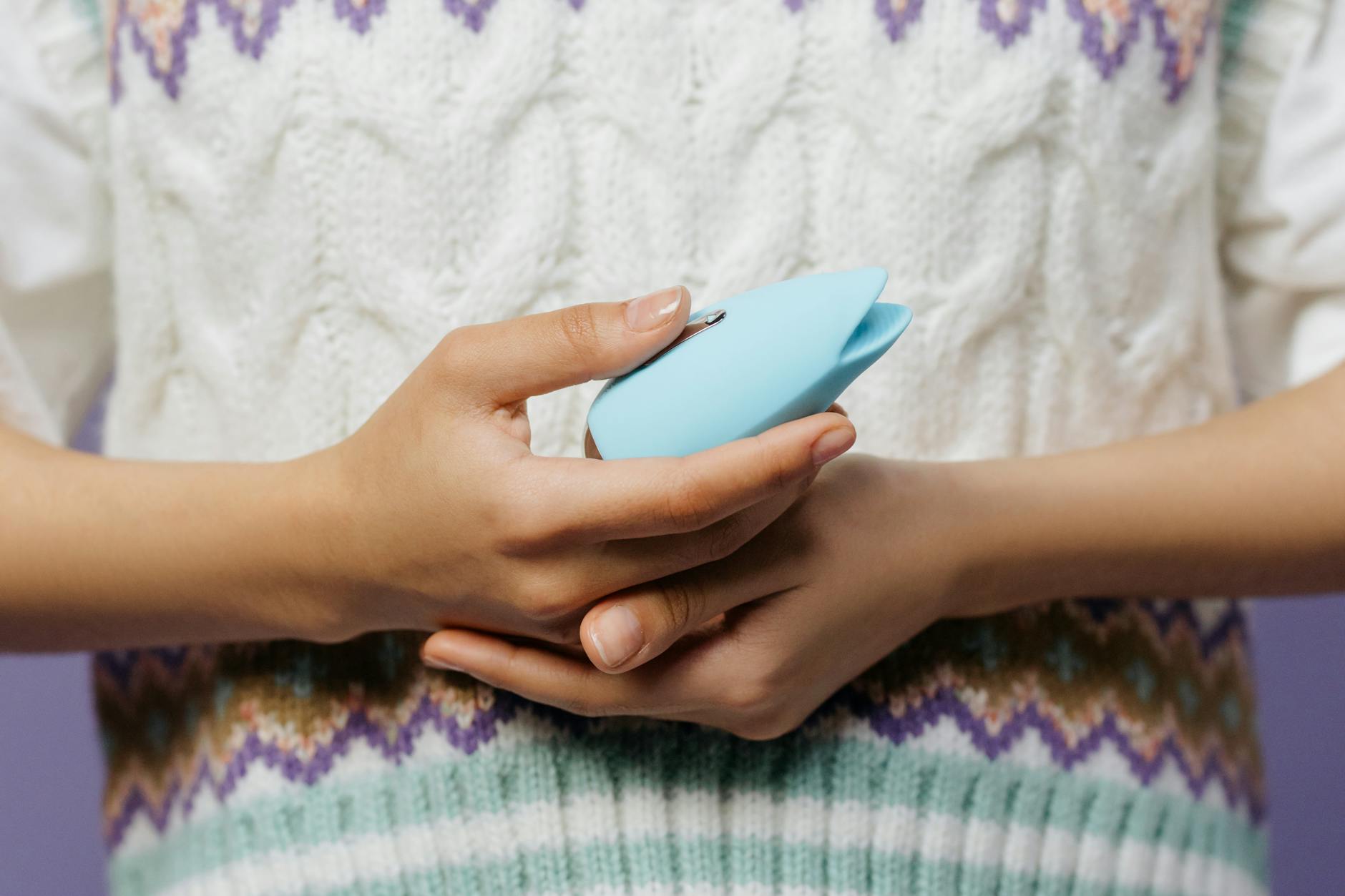
Let's start with the honest part
Miscarriage changes your body and your relationship to pleasure. Not permanently, not irreparably, but immediately. Your nervous system has been through something hard. Your hormones are recalibrating. Your grief and your desire are tangled up in the same space. The idea of reaching for a lemon vibrator might feel trivial, confusing, or necessary. All of those feelings are real.
I work with couples navigating pregnancy loss regularly. What I see is this: most people assume they need to wait until they feel "normal" again before pleasure matters. They don't. What they need is permission to use pleasure as part of their recovery. A lemon clitoral vibrator isn't a race back to how things were. It's a tool for reconnecting with yourself on your own timeline.
Why pleasure after loss feels different
Three things are happening in your body right now. First, your hormones are dropping fast. If you've experienced a pregnancy, your body was flooded with progesterone and other hormones for weeks or months. Now they're plummeting. That drop affects arousal, energy, mood, and lubrication. You're not broken. You're in hormone withdrawal.
Second, your nervous system is recovering from stress. Whether your miscarriage happened early or late, your body perceives it as a threat. Your sympathetic nervous system (the fight-or-flight part) is still partially activated. That makes relaxation feel almost impossible. Pleasure requires the opposite state. You can't will yourself into it.
Third, you're grieving. Grief and desire don't coexist smoothly. Some days you feel foggy and numb. Other days the sadness is sharp. Pleasure can feel disloyal to the loss, or triggering, or just pointless. That's also normal.
The permission piece matters more than the vibrator
Here's what I tell couples: using a lemon vibrator after miscarriage isn't about getting back to "normal." It's about giving yourself permission to experience sensation and pleasure as part of healing. Your body has been through something. It deserves care. Pleasure is care.
That might sound abstract, so let me be specific. Permission means: you don't have to wait until you've grieved enough. You don't have to do this with a partner if you don't want to. You don't have to have an orgasm. You don't have to feel anything at all the first time. You're experimenting, not performing.
If you have a partner, the permission conversation is even more important. Some couples find that using a lemon vibrator together becomes a way to reconnect after loss. Others need solo time first. Neither is wrong. But the mismatch between what you want and what your partner wants is where couples get stuck. Naming that difference saves you weeks of resentment.
When to start (there's no "right" time)
Most doctors clear you for sexual activity after four to six weeks, but that's about physical healing, not emotional readiness. You might be physically cleared at three weeks and emotionally ready at twelve. Or vice versa.
I recommend thinking about it this way: if you feel a curiosity or a pull toward pleasure, that's often your cue. Not a "should." A genuine, "I wonder what this would feel like." If you're only thinking about it because you feel like you're supposed to, wait. The difference is subtle but real.
One exception: if your miscarriage was very recent (within the first two weeks), your body is still healing physiologically. There's risk of infection and bleeding. Wait at least until bleeding has stopped and your doctor has cleared you.
How to use a lemon vibrator when you're ready
Start with curiosity, not a goal. Solo play first gives you the chance to reconnect with your body without performance pressure. A lemon vibrator is subtle enough for this. It's designed for the clitoris, not internal penetration, so you have control over intensity and location.
Keep it brief. You don't need thirty minutes. Five to fifteen minutes is plenty. You're checking in with yourself, not running a workout routine.
Use lower settings. Your nervous system is already activated by grief and hormonal shifts. Start at setting one or two on a lemon clitoral vibrator. You can always turn it up. You can't unscare yourself.
Add lubrication. Hormonal drops mean less natural lubrication. Water-based lube is your friend. It removes friction and makes the experience feel gentler, which matters when your body feels fragile.
Notice without judgment. Some sensations will feel numb. Some will feel too intense. Some will trigger sadness. Some will feel surprisingly good. All of that is data, not failure. Your job is to observe, not to achieve.
Many people find that the physical sensation of using a lemon vibrator or other clitoral vibrators gives their brain permission to step out of grief mode, even briefly. It's not about replacing grief. It's about having ten minutes where your nervous system remembers what pleasure feels like.
Rebuilding pleasure with a partner
If you're partnered, this is where things get tender. Your partner might be grieving too. They might feel guilty about wanting sex. They might worry they'll hurt you. They might not understand why you want to use a lemon vibrator when they're right there. None of those feelings are wrong.
Here's the framework I suggest: have the conversation outside of the bedroom, when you're both dressed and there's no pressure. Say something like, "I've been thinking about using a vibrator as part of feeling like myself again. I want to do some exploration solo first. When I'm ready, I'd like to try it together, but I need to know how you feel about that."
Then listen. If your partner is uncomfortable, that's information. You can explore why. Is it about feeling inadequate? About grief? About religious or cultural beliefs? Usually it's more specific than just, "I don't like vibrators." And usually, once you understand the underlying worry, you can address it.
When you do use a lemon vibrator together, it doesn't have to be during sex. You might start with solo play while your partner is present. Or they might use it on you. The pressure is to reconnect, not to have a specific outcome.
The emotional grief piece
Here's something therapists don't always say: using a lemon vibrator might make you cry. You might feel pleasure and sadness at the same time. You might feel guilty that your body still remembers how to feel good. All of that is grief doing its job. It doesn't mean you're doing it wrong.
If you're partnered, warn them about this possibility. "I might cry. That doesn't mean stop. It means my nervous system is processing." Most partners actually find this sacred, not alarming. It's the hiding of emotion that creates distance.
If you're solo and this happens, let it happen. Sit with both the pleasure and the sadness. They can coexist.
When to seek support
If weeks pass and you feel completely numb, or if touching yourself triggers intense panic, talk to your doctor or a therapist. Post-loss depression and anxiety are real. They respond well to treatment. Using a lemon vibrator isn't a fix for those. But clarity from a professional helps.
Same goes if you and your partner are stuck. If you want to reconnect sexually and they don't, or vice versa, that's worth exploring with a couples therapist. Miscarriage can reveal deeper relationship fractures. It can also draw couples closer. Either way, you need to talk about it.
Your recovery after pregnancy loss is individual. There's no timeline, no benchmark, no "right" way to do this. A lemon vibrator is just a tool. What matters is that you're giving yourself permission to heal on your own terms.
People also ask
Is it safe to use a lemon vibrator after a miscarriage?
Once you've had medical clearance (typically four to six weeks after a miscarriage), using a lemon clitoral vibrator is safe. The key is starting gently and stopping if you experience pain or excessive bleeding. Since lemon vibrators are external stimulators focused on the clitoris, they carry less infection risk than internal devices. Water-based lubricant reduces friction and makes it gentler on sensitive tissue.
Can using a vibrator help with postpartum depression after a pregnancy loss?
Pleasure isn't a cure for postpartum depression, but it can be part of recovery. When depression flattens everything, including desire, using a lemon vibrator might help your body remember what sensation feels like. That said, if you're experiencing depression after pregnancy loss, talk to your doctor. You may need therapy or medication alongside any physical reconnection practices.
What if my partner feels threatened by my using a vibrator after miscarriage?
That's a conversation worth having. Usually the threat stems from fear that they're not enough, or that you're moving forward without them. Reassure them that using a lemon vibrator is about reconnecting with your own body, not replacing them. Sometimes inviting them to participate or observe can ease that worry. Other times, you might need a couples therapist to navigate it.
How long after miscarriage should I wait before using a vibrator with my partner?
There's no fixed timeline. Most people benefit from solo exploration first. Once you've reconnected with your own pleasure, you have a better sense of what you want from partnered play. That might be two weeks after clearance. It might be three months. Your intuition is your guide.
Does grief interfere with orgasm after pregnancy loss?
Yes, often. Grief activates your sympathetic nervous system, which makes relaxation and arousal harder. You might find that you feel sensation but can't reach orgasm. That's not failure. Your nervous system is still recovering. As time passes and grief softens, your capacity for pleasure usually returns.
Can lemon vibrators help rebuild emotional intimacy after miscarriage?
When used with intention and communication, absolutely. The act of using a lemon vibrator together can signal to your partner that you're moving into a new chapter of recovery. It's tangible, hopeful, and often less emotionally loaded than the conversations themselves. For many couples, it's the thing that actually lets them reconnect rather than just talk about it.
Your pleasure matters. Your grief matters. Both can exist. A lemon vibrator is just one small tool for honoring both. Be patient with yourself.