Let's talk about the gap
Here's the thing nobody mentions: when you've spent months or years discovering pleasure on your own terms, with total control and zero performance pressure, bringing a partner back into that experience can feel weirdly exposing. You know exactly what works for your body now. You've built a rhythm, a pace, a breathing pattern. And now you're supposed to just... share that with someone else?
That's not simple. But it's also not impossible.
Why solo exploration changes the game
When you rediscover pleasure alone, something shifts. You're not accommodating anyone else's pace or preferences. You're not managing their ego or their insecurity. You're not performing. You're just learning your own body, which turns out to be genuinely radical when you haven't had that space in years.
This is valuable work. Don't minimize it. But it does create a kind of solo momentum that can feel hard to interrupt.
Most couples who've drifted into separate pleasure spaces report the same friction point: the transition back feels awkward because the vulnerability standards are different. When you're alone with a toy like the Lem, you can set the exact rhythm that works. With a partner watching, holding, or joining in, you lose some of that control. And control, once you've had it, is hard to voluntarily surrender.
Here's the counterintuitive part. That loss of control is exactly where new intimacy lives. But you have to choose it intentionally, not stumble into it feeling resentful.
The conversation that has to happen first
Before you bring a partner into your solo practice, you need to separate three things in your own mind: what you've discovered about your pleasure, what you want from partnered sex, and what you're nervous about.
These are not the same conversation, and mixing them breaks both.
"I've learned I need 15 minutes of warm-up" is information. "I want you to be patient with me" is asking for a behavior. "I'm scared you'll judge me for having a vibrator" is a fear that needs air. Say them separately. Let each one land.
Then ask your partner the same thing: what have they been wanting that they haven't felt safe to ask for? What do they think partnered pleasure should look like? What are they nervous about?
This is hard, vulnerable work. It's also the only foundation that actually holds.
How to introduce the tool itself
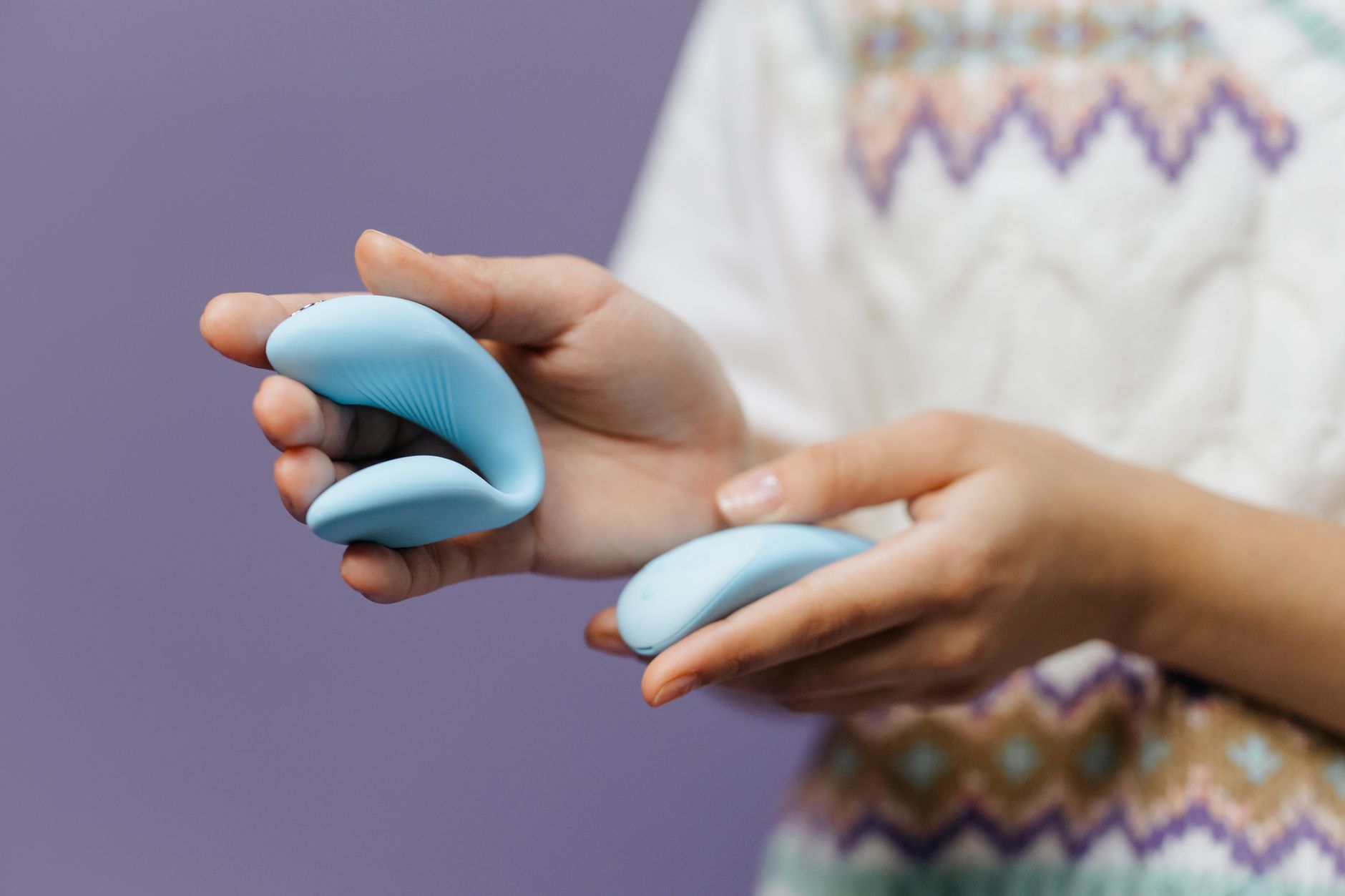
If you're bringing a lemon clitoral vibrator into partnered play for the first time, the framing matters.
Avoid: "I need this because you're not enough." This is true for almost no one, and it flips the conversation into a defensive spiral that kills intimacy faster than anything else.
Try: "I've learned what I like when I'm alone, and I want to bring that into our time together. This tool helps me get there. I want to experience it with you, not instead of you."
There's a real difference. The first makes the toy the problem. The second makes the toy a bridge.
When you actually introduce a clitoral vibrator like the Lem, do it outside the bedroom first. Show them how it works. Explain the sensation. Let them hold it if they want. Demystify it. A lot of partner resistance melts when the tool is just... normal. Not a threat. A thing that exists.
Starting small: what actual integration looks like
Honestly though, jumping straight to using the Lem during partnered sex when you haven't done it before is ambitious. Your nervous system is already managing partner presence, vulnerability, and performance anxiety. Adding a new tool at the same time is a lot.
Here's a gentler path.
Session 1: You use the vibrator while they watch. Not for their pleasure. For yours. They're just present. They can touch you, kiss you, talk to you. But the main event is you discovering what works in their presence, at your own pace. This takes the performance pressure off both of you. You get to learn how your body responds with them there. They get to watch what actually turns you on.
Session 2: You use the vibrator while they participate with partner touch. Maybe they're kissing your neck while you're using the Lem on your clitoris. Maybe they're inside you while you're using it for external stimulation. The point is they're actively involved, but the vibrator is still doing its job. You're not managing both simultaneous sources of stimulation yet.
Session 3: You're comfortable enough to trade control. Maybe they hold the vibrator while you guide the pressure and placement. This is the one where you actually feel partnered with the tool. You're collaborating.
Session 4 and beyond: You know what you like, they know what you like, and the vibrator is just another part of the experience.
Don't rush these phases. Some couples need two weeks. Some need two months. Neither is wrong.
Managing the emotional stuff that actually gets in the way
Here's what I see in my practice constantly: the real block isn't logistical. It's emotional.
One partner (usually the one bringing the vibrator into the picture) feels shame about needing a tool. The other partner feels inadequate because they think they should be "enough." Both of those feelings are completely understandable and also completely based on myths about how bodies work.
A clitoral vibrator doesn't mean your partner isn't enough. It means your clitoris has about 8,000 nerve endings, and some of them respond really well to rapid, focused stimulation. That's anatomy, not relationship failure.
If you're the partner being introduced to the toy, here's the reframe: this isn't about you being replaced. This is about being allowed into your partner's real pleasure. Most people spend their whole lives pretending they like things they don't. When someone stops pretending and lets you see what actually lights them up, that's intimacy. Actual, rare, hard-won intimacy.
If you're the one bringing the toy back to a partner after solo exploration, you get to ask for patience. You get to say "I'm rusty at this" or "I need to remember how to ask for what I want while another person is here." You don't have to pretend your solo learning didn't change you. You just have to invite them into the new version.
The lemon clitoral vibrator specifically
If you've been using a tool like the Lem during solo play, it has some specific advantages when you transition to partnered use.
The suction sensation is quiet compared to traditional vibrators. It doesn't create that buzzing sound that some people find jarring or self-conscious in a partnered moment. The sensation itself is also different from partner touch in a way that doesn't feel competitive. It's not trying to replicate a tongue or fingers. It's its own thing. Your partner can work alongside it instead of against it.
The size is small enough that a partner can actually participate. They can hold it while you guide. They can use it while also touching you in other ways. It's not a barrier the way some larger toys feel.
Start with lower suction settings when your partner is present. Your nervous system might be more activated than during solo play, which means your clitoris might actually be more sensitive. You don't need the intensity you used alone.
When this gets hard
Sometimes the transition doesn't go smoothly. One partner feels left behind. The other feels pressured. The vibrator becomes a symbol of something bigger that needs to be worked through.
This is actually normal. It doesn't mean you're doing it wrong. It means you're bumping into real stuff.
If you hit a wall, slow down. Go back to just talking about what you each want. Maybe see a couples therapist for a few sessions specifically about intimacy. This is worth professional support. There's no shame in that. You're doing something vulnerable and complicated.
Rebuild pleasure after a drift takes time and repetition. It takes showing up over and over when it would be easier to just go back to solo. It takes asking for what you want and listening to what your partner wants without immediately making it about yourself.
But here's what I've seen over and over: couples who go through this actually end up with deeper intimacy than they had before the drift. Because they had to talk about sex, desire, pleasure, and vulnerability. They can't unsee each other now. And that's the whole point.
FAQ: The questions people actually ask
How do I tell my partner I've been using a vibrator without them feeling insecure?
Be straightforward, timed well, and lead with the relational part. "I want to talk about something vulnerable with you" works better than an ambush. Say it directly: "I've been exploring solo pleasure with a toy, and I want to bring that into our time together." Then pause. Let them ask questions. Don't overexplain or apologize. You're not doing anything wrong.
What if my partner refuses to engage with the toy?
You get to have a conversation about that refusal. Is it shame? Insecurity? A legitimate boundary about sensation or pressure? Those are all different and need different responses. Sometimes partnered intimacy requires compromise. Sometimes it requires one person choosing to push past their discomfort. Sometimes it requires accepting that you want different things and deciding how to handle that. But you can't figure it out if you don't actually discuss it.
Should I be using the lemon vibrator during partnered sex if I haven't with them yet?
Not as your first rodeo, no. Practice the phases I outlined. Start with them present and you in control. Move slowly to them participating. You're rebuilding trust and presence together. The vibrator is just a tool for that, not the main event.
How do I bring up that I need more stimulation than my partner can give?
The same way you'd bring up any other need: directly and without blame. "My body responds really well to rapid clitoral stimulation, and I need that to orgasm consistently. A vibrator helps that happen. I want to experience that with you, not instead of you." Your pleasure needs aren't a referendum on your partner's adequacy.
What if using a toy together feels less intimate than solo play?
That might be true at first. Solo play has no external variables. Partnered play always has someone else's presence, anxiety, or pressure in the room. That's actually harder and more exposed, not easier. Give it time. The intimacy that builds when someone sees your real pleasure, not a performance of pleasure, is different and deeper. But it takes practice.
Can I use the Lem with a partner inside me?
Yes, and many people find that combination really satisfying. External suction plus penetration hits different nerve endings. Start with lower pressure and clear communication about what feels good. Your partner also needs to be in a position where they can adjust their movement without fighting the vibrator for space.
The actual long game
Rebuild intimacy after solo exploration isn't a one-conversation thing. It's months of showing up, being vulnerable, asking for what you want, listening to what your partner wants, and choosing each other over and over even when it would be easier to retreat.
Tools like the Lem aren't magic fixes for disconnection. But they can be really useful bridges when both partners are willing to walk across them.
Your pleasure matters. Your partner's pleasure matters. Building something together that honors both of those things takes work. It's also some of the most meaningful work you can do as a couple.
If you're struggling with this transition or if conversations keep hitting the same wall, reach out. A marriage and family therapist who specializes in intimacy can help you untangle what's actually blocking connection, and that's worth the investment.
You deserve partnered pleasure that doesn't require you to hide part of yourself. Your partner deserves to know what actually turns you on. Building that takes courage and honesty. You're doing the right thing by trying.