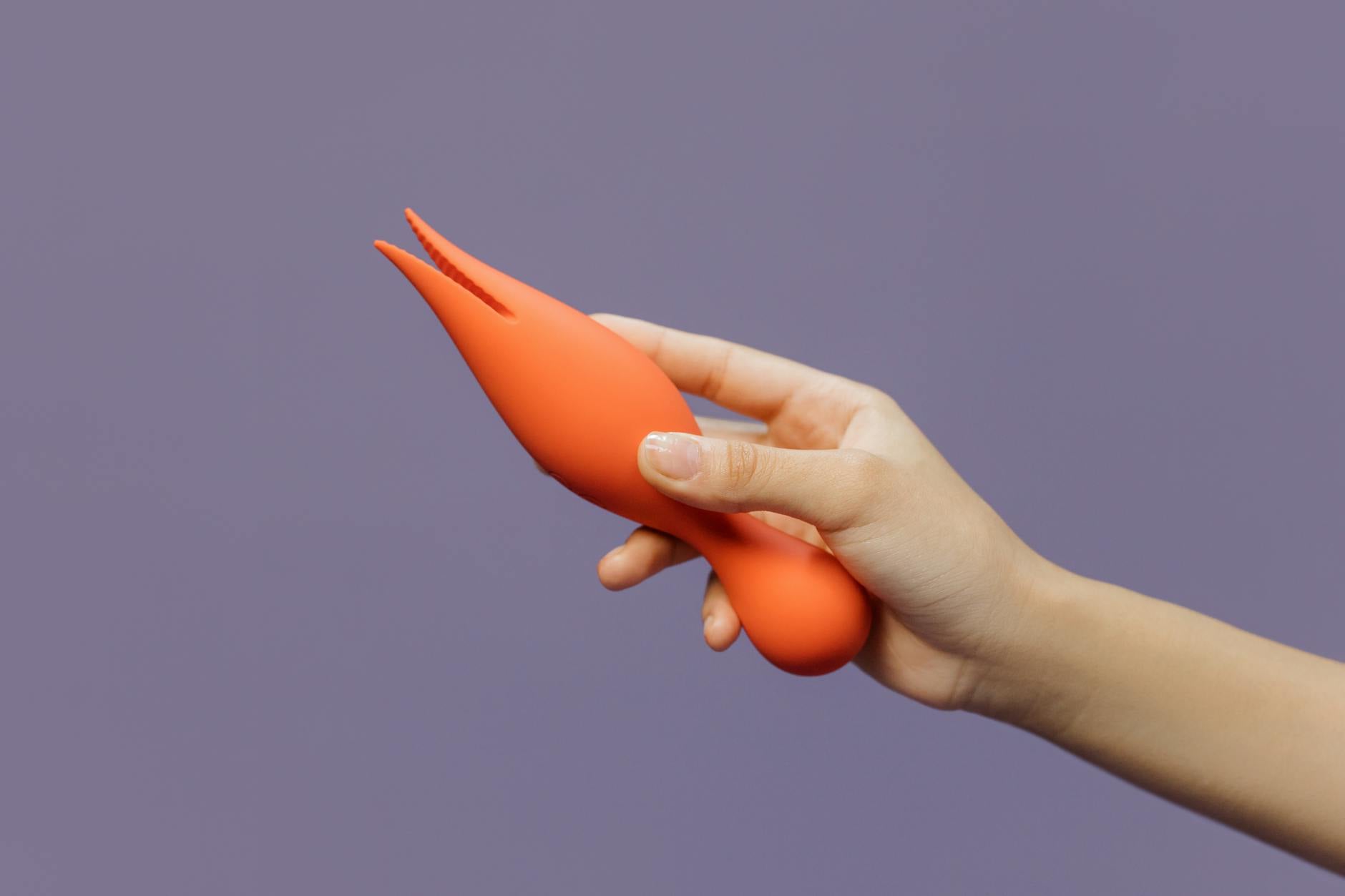
The conversation you're probably dreading
Here's the thing about introducing a lemon vibrator to partnered sex for the first time: the conversation feels way bigger than it is. You're running through worst-case scenarios in your head. What if they think it means they're not enough? What if it's weird? What if one of you freezes up mid-moment?
I've worked with hundreds of couples navigating this exact transition. The awkwardness almost never lives up to the anticipation. What does live up to it is the pleasure on both sides when you actually do it right.
Why partners actually want this (even if they don't know it yet)
Let me flip the framing for you. Your partner probably doesn't feel threatened by a lemon vibrator. They feel relieved. Here's why: if you've been struggling to orgasm, or if orgasms take forever to build, your partner has likely been stressed about it too. Not because they're selfish, but because they genuinely want you to feel good. A lemon clitoral vibrator isn't a replacement for your partner. It's a tool that often makes partnered sex more pleasurable for both of you.
Research on couples and vibrators consistently shows the same thing: partners who use toys together report higher sexual satisfaction, better communication, and less performance anxiety overall. The vibrator becomes a shared project, not a threat.
That said, framing matters. "I want to try this toy" lands differently than "I need this to come." One is collaborative. The other sounds like a problem they need to solve. Pick the first one.
The talk (how to actually do it without dying of embarrassment)
Don't do this during sex or right before sex. Do it when you're both clothed, relatively calm, and actually have time to talk. Not in the car on the way to dinner. Not when you're already in bed and vulnerable.
Start somewhere true. "I've been thinking about trying a vibrator during sex with you." That's it. You don't need to justify it or explain the science or your entire sexual history. You can follow up with whatever's genuine: "I think it would feel really good," or "I'm curious what it would be like," or "I've heard good things about them."
Then pause. Let them talk. Really listen to what they say. If they ask questions, answer them. If they say they need time to think about it, that's fine. If they immediately want to order one together, that's fine too. Both are normal.
One note: if your partner reacts with anger, shame, or coercion around this conversation, that's not a vibrator problem. That's a relationship problem, and it's worth addressing separately or with a therapist before moving forward.
Choosing the right toy together (or at least picking something that feels collaborative)
If your partner is open to it, shop together. Pull up the Lemon Sucker Shop or another toy site and scroll through options as a team. Look at the lemon vibrator specs. Talk about texture, size, noise level, and vibration patterns. This isn't a practical exercise. It's foreplay.
If you want to choose before you tell them, that's okay too, but I'd lean toward a smaller, quieter device for the first go. A lemon clitoral vibrator is perfect because it's compact, feels intuitive, and doesn't require complicated navigation mid-sex. You want something that lets you focus on connection, not logistics.
The first time you actually use it together
Set yourself up for success. You'll want:
Privacy and unrushed time. You don't need four hours. You need 30 minutes where neither of you is watching the clock or worried about someone walking in.
Lube. Even if you don't always use it, start with lube for a lemon vibrator session. It makes the experience smoother, literally and figuratively. It also takes pressure off your body to produce lubrication on demand, which can feel like a performance metric. It's not. It's just helpful.
Patience for the learning curve. The first time, you might find the angle awkward. The vibration might be too much or too little. Your partner might not know exactly how to position it. That's completely normal. Laugh about it if you can. Adjust. Try again.
Start slow. Most lemon vibrators have multiple speed settings. Begin on the lowest setting and work up from there. Your partner doesn't need to jump to intensity level five right away. Let the pleasure build.
What your partner can actually do
This is where the collaborative part gets real. A lemon vibrator isn't a substitute for your partner's hands or mouth or body. It's an addition. Your partner can:
Hold the vibrator while you guide it. You're in control of angle and pressure. They're doing the work. This keeps you connected and communicative.
Use it on you while they're touching you elsewhere. They can hold the vibrator against you while kissing your neck, or chest, or using their hands on other parts of your body. This is where it gets genuinely collaborative.
Hand it to you while they're inside you. If penetration is part of your sex life, a lemon clitoral vibrator can turn that into something that feels way more intense for both of you. They stay present. You add external stimulation. Everyone wins.
Watch. If your partner just wants to hold the vibrator and watch you use it on yourself, that's valid too. Not all good partnered sex looks like traditional coupling. Some of it is about presence and permission and attention.
The conversation after
Once you've actually done it, talk about it within the next day or two while it's still fresh. Not in a clinical debrief way. Just: what felt good? What felt weird? Would you do it again? What would you change?
This conversation is where a lot of couples miss the mark. They finish and then never talk about it, which means neither person actually knows if the other one enjoyed it. Don't do that. Five minutes of honest feedback now prevents way more awkwardness down the road.
When one partner is hesitant or nervous
Some people have real blocks around vibrators. Maybe they grew up with a lot of shame around pleasure. Maybe they worry about losing their role in your sex life. Maybe they're genuinely not interested, and that's their boundary.
You have three options here. One: respect the boundary and don't use a vibrator during partnered sex, but do use it solo. Two: negotiate a compromise. They don't have to hold it or touch it; you do it yourself while they're present. Three: find a couples therapist who specializes in sexuality and work through the blocks together if this is important to you.
Option three isn't necessary if it's just not their thing. But if the hesitation comes from shame or control, that's worth exploring.
Why this actually strengthens things
I've seen hundreds of couples where introducing toys moved them from a place of sexual disconnection back into genuine curiosity about each other. The vibrator isn't the magic. The magic is that you had to talk about desire. You had to say what you wanted. Your partner had to listen and say yes or negotiate or express their own needs.
That's real intimacy. That's the stuff that makes couples actually connected.
A lemon vibrator is just the vehicle. The real pleasure is the conversation that got you there.
FAQ: What people actually ask about using a lemon vibrator with a partner
What if my partner feels like a toy is threatening to them?
Start by acknowledging that feeling without trying to logic it away. "I hear that you're worried this might change things between us." Then ask what specifically they're worried about. Often it's not the toy. It's a deeper fear about desire, connection, or adequacy. A vibrator conversation can be an opening to a bigger conversation if you're willing to go there.
Should I ask permission before using it during sex?
If you've had the conversation beforehand and agreed to try it, you don't need to ask every single time. But check in verbally or nonverbally when you introduce it. "Want to try this now?" or a simple look to see if they're on board. Consent isn't a single moment. It's ongoing.
Will a lemon vibrator desensitize me?
No. The research doesn't support this. What does happen sometimes is that your body learns what intense stimulation feels like, and then less intense stimulation feels less satisfying. That's not desensitization. That's preference. You can absolutely still enjoy partnered sex without a vibrator once you've experienced it with one. You're just adding to your toolkit.
What if my partner wants to use it but I'm nervous?
Take your time. Use it solo first so you're familiar with it. Start with a low setting. Have the vibrator conversation that's about what feels good, not what's expected. And remember: you're allowed to say stop at any point. Comfort matters more than novelty.
How do I handle it if the first time feels awkward?
That's not a failure. That's normal. Awkwardness during sex is almost always just information. Maybe the angle didn't work. Maybe the setting was too intense. Maybe you both felt self-conscious. That's fixable. Do it again, adjust, and see what happens. Good partnered sex almost never feels perfect the first time.
Can we use a vibrator during every sexual encounter?
You absolutely can. Or you can use it sometimes. Or you can use it for a month and then take a break. There's no rule. Do what feels sustainable and pleasurable for both of you. If you're using it because you feel like you have to, that's the moment to pause and check in.
The real outcome
Most couples who introduce a lemon vibrator together don't regret it. They might not use it constantly, but they like knowing it's an option. They like the conversation it opened up. They like the permission it gave both of them to ask for what they actually want instead of settling for what feels safe.
Your pleasure matters. Your partner's pleasure matters. And sometimes the thing that gets both of you there is just being willing to try something new together and talk honestly about what happens next.
If you want to explore this more or work through relationship communication around pleasure and intimacy, reach out to us. That's the kind of conversation worth having.