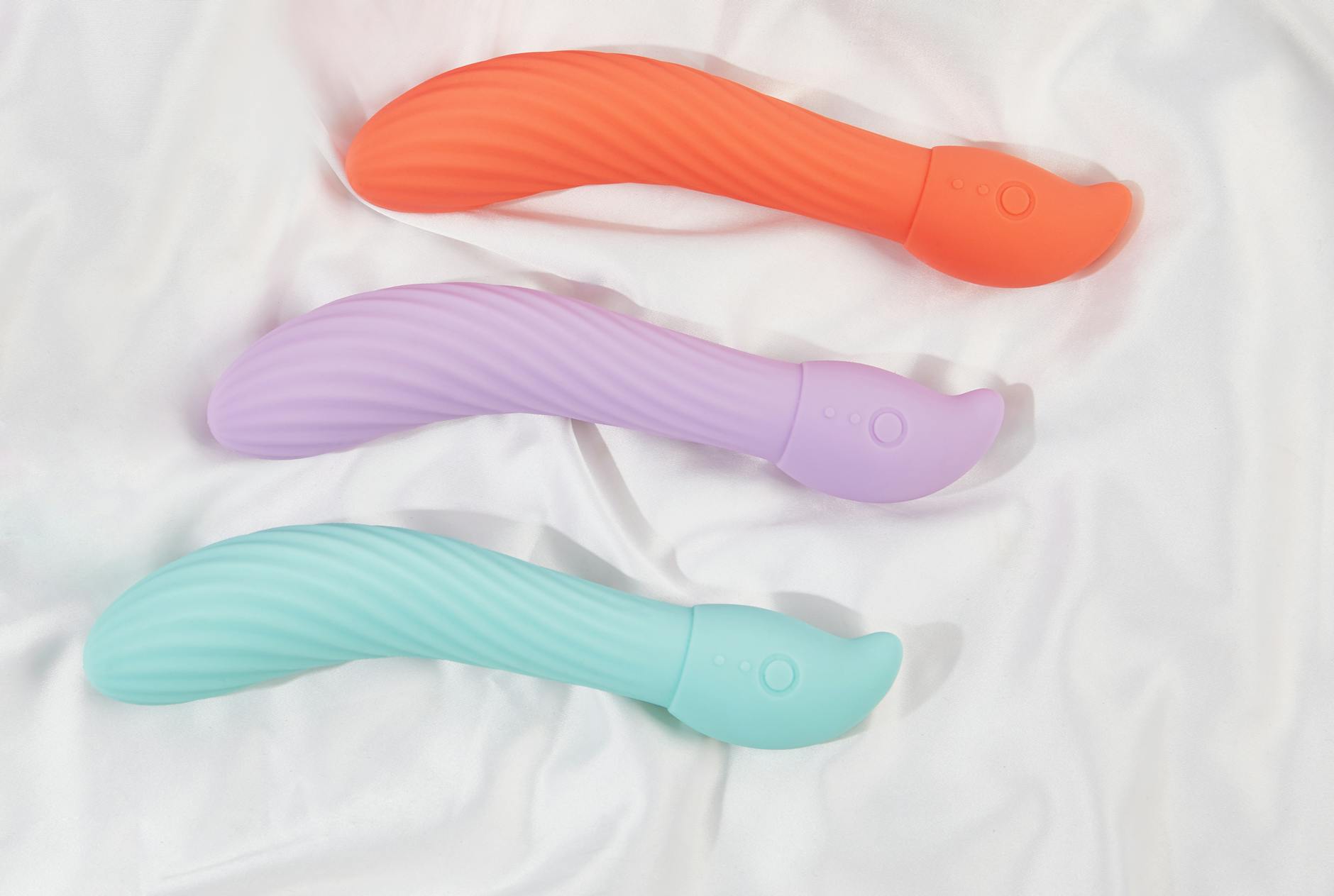
The thing nobody tells you about bringing up sex toys
Your partner probably isn't going to reject you. They're probably going to wonder why it took so long. I've worked with hundreds of couples, and the conversation that feels terrifying in your head almost always lands differently in reality. The real barrier isn't resistance. It's vulnerability, which is way more manageable once you know what you're actually saying.
Here's what I see happen: one partner rehearses the conversation for weeks, catastrophizes the reaction, and then when they finally mention it, the response is "Oh, I thought you'd never ask." The other dynamic is equally common. The person who brings it up is nervous because they assume they're asking for something forbidden or weird. They're not. They're asking for connection.
Why now is the right time (even if it doesn't feel like it)
There's no perfect moment. There's just the moment you stop waiting for one. That said, timing matters in two narrow ways: the setting and the headspace.
Don't do this during conflict, during sex, or with an audience. Don't do it when either of you is stressed, tired, or distracted. The setup should feel calm and private. Not a "we need to talk" energy. More of a "I've been thinking about something" energy. The best openings happen on a walk, during a quiet evening at home, or in a car where you're both facing forward (which removes eye contact pressure and makes vulnerable conversations easier).
Why forward-facing? Eye contact intensity can make some people freeze up. When you're side by side or looking ahead, there's less immediate pressure to perform a reaction.
The words that actually work
Forget scripts. Scripts sound like scripts. But here's the shape of sentences that open the conversation without triggering defensiveness:
"I've been curious about something, and I want to talk about it with you because I trust you." This does three things at once. It signals that the topic matters to you. It frames the conversation as collaborative, not accusatory. And it affirms your partner directly.
Then: "I've been thinking about bringing a vibrator into what we do together. I think it could feel really good for me, and I like the idea of exploring it with you." Notice what's not there. You're not saying "You're not enough." You're not saying "I'm bored." You're not apologizing. You're stating a desire and extending an invitation.
If your partner asks why, the honest answer is better than a rehearsed one. "Because I want to try something that might feel amazing." "Because I think it could be fun for us." "Because I've read that it can help with _____, and I want to see if that's true for me." All of these are true. Pick the one that feels most genuine.
What you're actually asking for (and what you're not)
One of the biggest misunderstandings is that introducing a vibrator is a criticism of your partner's technique, attractiveness, or effort. It's not. A lemon vibrator isn't a replacement for your partner. It's an addition. There's a meaningful difference, and your partner needs to understand it.
You're not saying: "I need a toy to get off with you." You're saying: "I want to experience this sensation together." Those feel completely different to hear.
Some partners worry that bringing in a toy means the relationship is in trouble. It doesn't. It means the opposite. It means you're invested enough in the dynamic to want to expand it. You're not checking out. You're checking in.
The objections you might hear (and how to respond)
"Doesn't that mean I'm not enough?" This is the big one. The response: "No, it means I want to explore more sensations with you. I still want you. I want us both to feel good." Then, if they're open to it, you could add: "I also want to make sure you're getting what you need. So let's talk about that too."
"I'm not comfortable with that." This is real, and it deserves respect, not pressure. The response: "That makes sense. What is it about the idea that feels uncomfortable? Is it the toy itself, or something else?" Sometimes discomfort comes from lack of information. Sometimes it's deeper. You won't know unless you ask.
"That seems weird / kinky / too much." This often comes from a partner who has limited exposure to sex toy culture. The response: "I get why it might feel that way if it's new. A lot of people use them, and it's pretty straightforward. Want to know more about it?" Normalize it by offering information, not judgment.
"Maybe later, but not now." This is a yes, just not an urgent one. Respect the timeline. Don't push. Circle back in a few months if interest was genuine.
Setting up the first experience right
If your partner says yes, don't jump straight to usage. There's a warm-up that matters here. It could look like: showing them the toy, letting them hold it, explaining how it works, talking about where and how you might use it together.
The first time using a lemon clitoral vibrator with a partner can feel awkward if expectations are too high. It might not feel amazing immediately. That's okay. The point is trying something together and getting comfortable with the idea.
Start on a lower setting. Build from there. And if it's not working in the moment, that doesn't mean it won't work later. Some couples need a few tries before the experience feels natural.
The conversation after the conversation
Once you've introduced the idea and ideally tried it, check in. Not with a report card energy ("That was good, right?"), but with genuine curiosity. "What did you think?" "How did that feel?" "Want to try it again or do something different?"
If your partner loved it, great. You've just expanded your shared pleasure toolkit. If they were neutral or hesitant, that's data. Maybe the tool itself wasn't a fit. Maybe the setup wasn't right. Maybe they need more time to warm up to the concept.
Some partners who resist initially become enthusiasts once they see how much pleasure their partner experiences. Others come around slowly. And some don't come around, and that's a boundary you both get to have.
When your partner resists and won't budge
This is harder. If your partner has said no and isn't open to revisiting it, you're facing a real incompatibility. Not a deal-breaker necessarily, but something that matters.
Your options then are: accept the boundary, explore why the resistance is so strong (is it shame, control issues, genuine discomfort?), or consider whether this is one of several places where you feel mismatched. One conversation usually isn't enough to shift someone's mind, especially if the resistance is tied to deeper beliefs about sexuality or control.
If you want to explore solo use without your partner's involvement, that's your call. But it changes the dynamic you were hoping for.
Why this conversation is actually about intimacy
I want to circle back to why this matters beyond the physical. Asking your partner to explore something with you is asking them to see you fully. Not the version you've been performing, but the actual version that wants and feels and desires. That's terrifying. And that's also the whole point.
The couples I work with who introduce vibrators into their intimate lives aren't fixing a broken connection. They're deepening the one they have. They're learning that desire can evolve. They're practicing vulnerability with someone they trust. And they're choosing pleasure together, which is its own kind of intimacy.
Frequently asked questions
What if my partner thinks I'm asking for something extreme?
A lemon clitoral vibrator is one of the most straightforward, accessible sex toys available. It's not extreme. If your partner thinks it is, they're working from limited information. Offer to read something together. Share what you've learned about why people use them. Normalize the conversation by treating it like you would any other topic you're curious about together.
Should I show my partner the toy before bringing it up?
You can, but it's not necessary. Some partners respond better to the idea first, then the visual. Others want to see it to make it real. Read your partner. If they're more tangible-oriented, showing them helps. If they're more concept-oriented, the conversation first makes sense.
What if my partner wants to use it but feels embarrassed?
Embarra... is completely normal. You're doing something new together. The embarrassment usually fades once you start. Dim the lights, take the pressure off performance, and focus on exploration rather than getting to a specific outcome. Laugh together if something feels awkward. That helps.
Is it weird to use a lemon vibrator if my partner has low libido?
Not at all. In fact, a lemon vibrator can help a partner with lower libido enjoy more intense sensations without requiring more effort on their part. But this conversation is different. You're not asking them to perform. You're saying "I want to explore something that works for me, and I'd love to share it with you." If they're not interested in participating, that's separate from whether you use it solo or together.
How do I know if my partner will be into it?
You don't until you ask. And that's the vulnerability part. You have to risk the "no" to get to the "yes." Most partners surprise you, though. They're either curious, relieved you brought it up, or willing to try it to see what happens. Resistance is less common than we think.
What if they say yes but then get weird about it during sex?
That's a reset moment. Pause. Check in. "Is this not working for you?" Sometimes the anticipation is different from the reality. Sometimes discomfort surfaces once it's actually happening. Neither is a failure. It just means you try again later, adjust the approach, or explore what the resistance is actually about.
The last thing to know
Bringing up a lemon vibrator isn't radical. It's just honest. You're saying you want to feel good and you want to do it with someone you trust. That's not too much. It's actually the point of being in a partnership. Your partner deserves to know the real you, including the parts that want and explore. And you deserve to find out if they're willing to show up for that.
Ready to have the conversation? Start with "I've been thinking about something," and let the words follow naturally. Your partner is probably more ready than you think.